
Ashtavakra Gita
Who gave this knowledge?
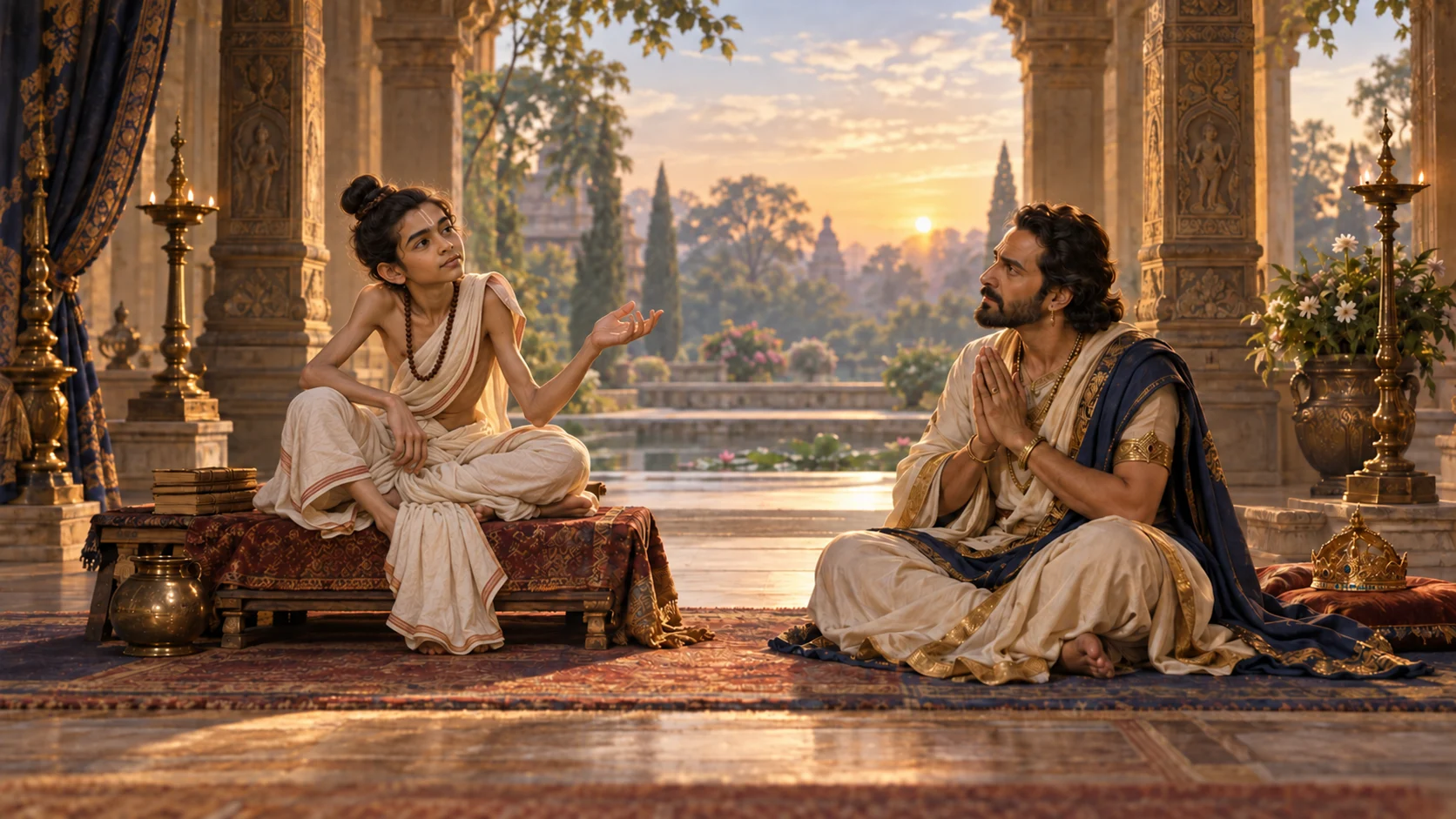
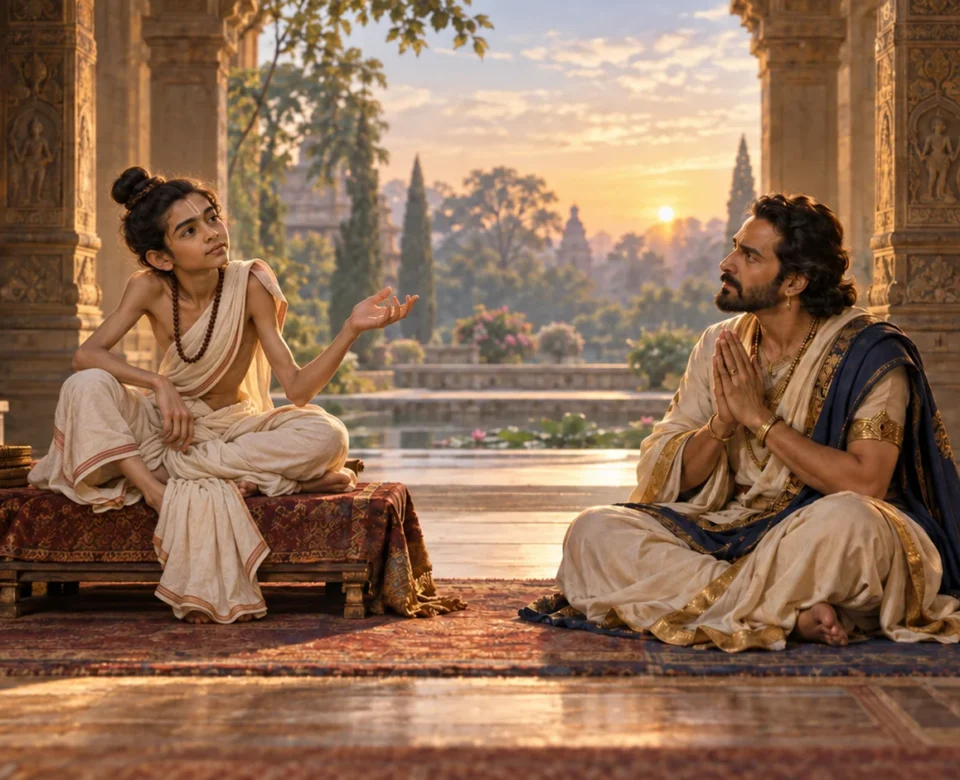
Sage Ashtavakra gave this knowledge to King Janaka, the ruler of Mithila and a seeker of truth. The text is a dialogue between a fearless teacher and a king who is willing to question the deepest assumptions about himself.
Janaka opens with three direct questions: How is true knowledge attained? How does liberation arise? How does dispassion become natural? Ashtavakra does not answer with ritual, pilgrimage or a long list of disciplines. He turns Janaka’s attention toward the one who is aware of every thought, sensation and role.
The central teaching is that our essential Self is pure awareness—the witness of the changing body and mind. Bondage begins when awareness is mistaken for a limited identity; freedom is recognised when that confusion falls away. This uncompromising vision is why the Ashtavakra Gita is read as one of the clearest expressions of non-dual wisdom.
Our weekly series follows this conversation chapter by chapter, explaining selected Sanskrit verses in accessible language while preserving their depth.

Explore the chapters
Every published article in this scripture category appears here automatically as the series grows.

The life of Sage Ashtavakra
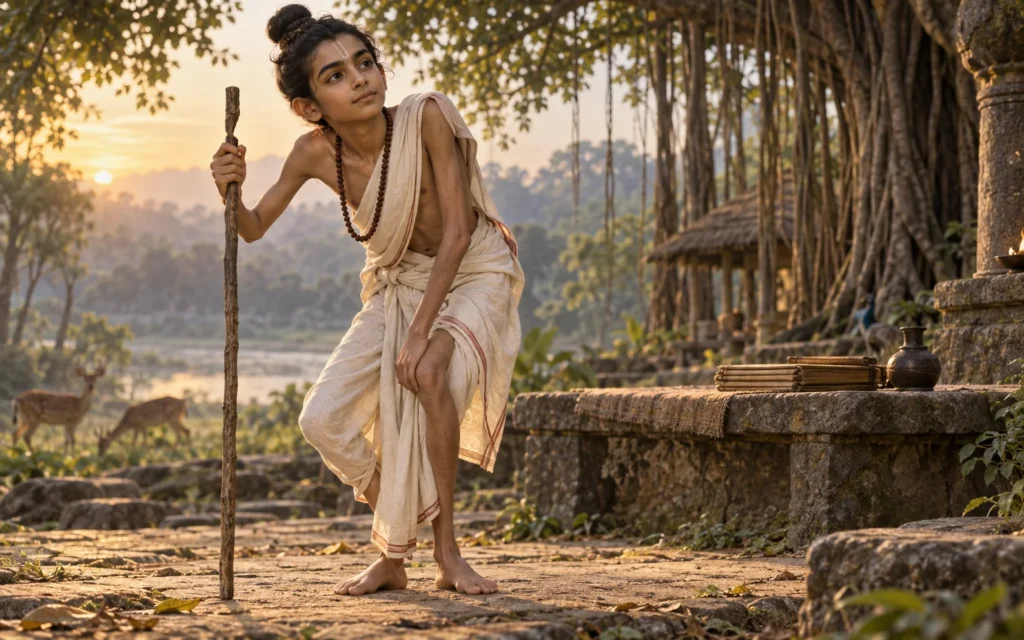
The Vana Parva remembers a child whose body drew attention, but whose learning and courage compelled a royal court to look beyond appearance.
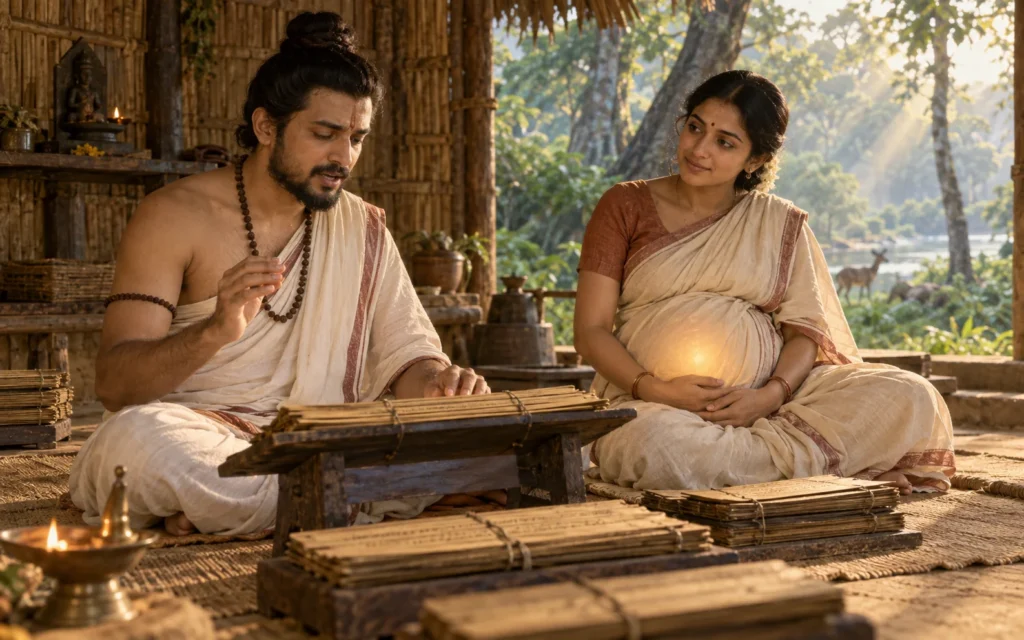
Wisdom heard before birth
The Mahabharata tells that Kahoda, a devoted student of Uddalaka, married his teacher’s daughter Sujata. While Sujata was pregnant, Kahoda recited the Vedas. The child listening from the womb pointed out faults in the recitation. Stung by the correction, Kahoda pronounced that the child would be born bent in eight places. Thus the boy came to be known as Ashtavakra—“eight bends.”
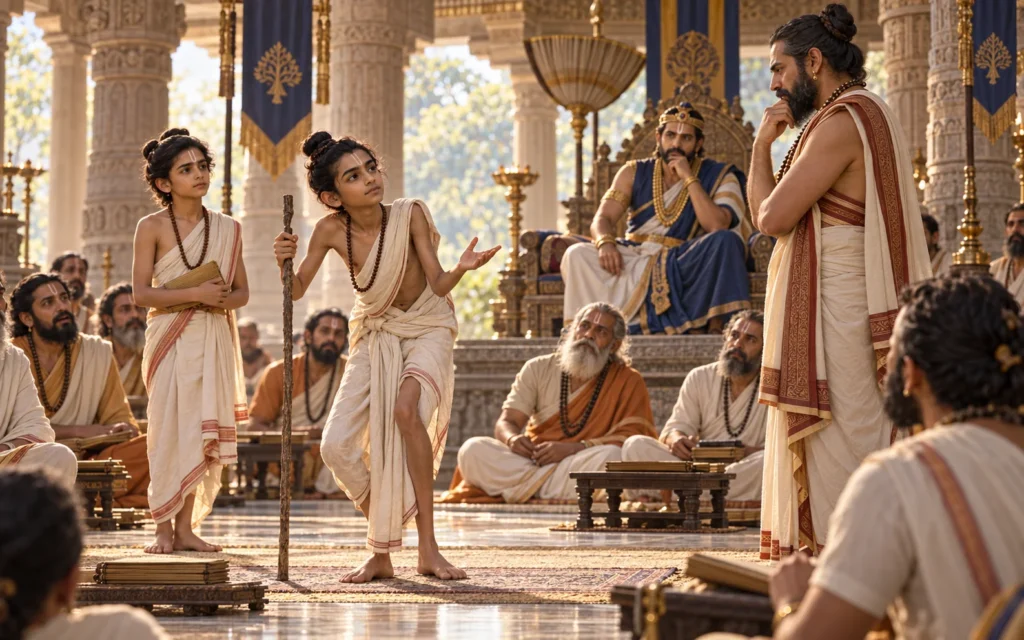
The journey to King Janaka’s court
Before Ashtavakra’s birth, Kahoda had gone to King Janaka’s court seeking support. There he was defeated in debate by the scholar Bandi and sent into the waters. The truth was kept from the child. When Ashtavakra learned it at about twelve years of age, he travelled to Mithila with his uncle Shvetaketu, answered the gatekeepers and the king with remarkable clarity, and challenged Bandi before the assembled scholars.
Ashtavakra defeated Bandi. Bandi then revealed that he was the son of Varuna and that the defeated scholars had been sent to attend Varuna’s sacrifice beneath the waters. They returned, and Ashtavakra was reunited with his father.
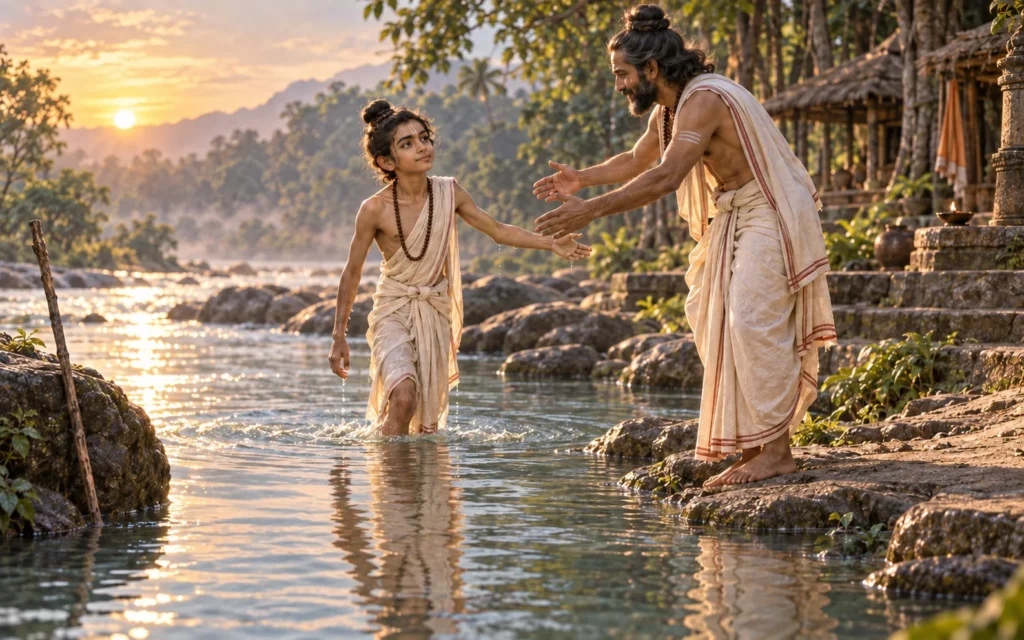
The Samanga River
After their reunion, Kahoda asked his son to enter the Samanga River. The epic says that when Ashtavakra bathed there, the eight bends of his body became straight. Yet the name Ashtavakra remained, carrying the memory of the child whose wisdom had already proved independent of bodily appearance.
Source note: the life narrative above follows the Ashtavakra account in the Mahabharata, Vana Parva, Sections 132–135; the teaching summary follows the opening exchange of the Ashtavakra Gita.