King Muchukunda slept so long that everyone he loved vanished into time. When Krishna awakened him in a mountain cave, the exhausted warrior discovered that the deepest rest is not sleep, but freedom from the hunger to be important.
Muchukunda once left his earthly kingdom to defend the gods through a long war. When victory came, they told him that ages had passed below. His family, ministers, and companions were gone. Time had carried away the life to which he hoped to return.
The weary king asked for sleep. The gods granted that anyone who disturbed him would be burned by his gaze.
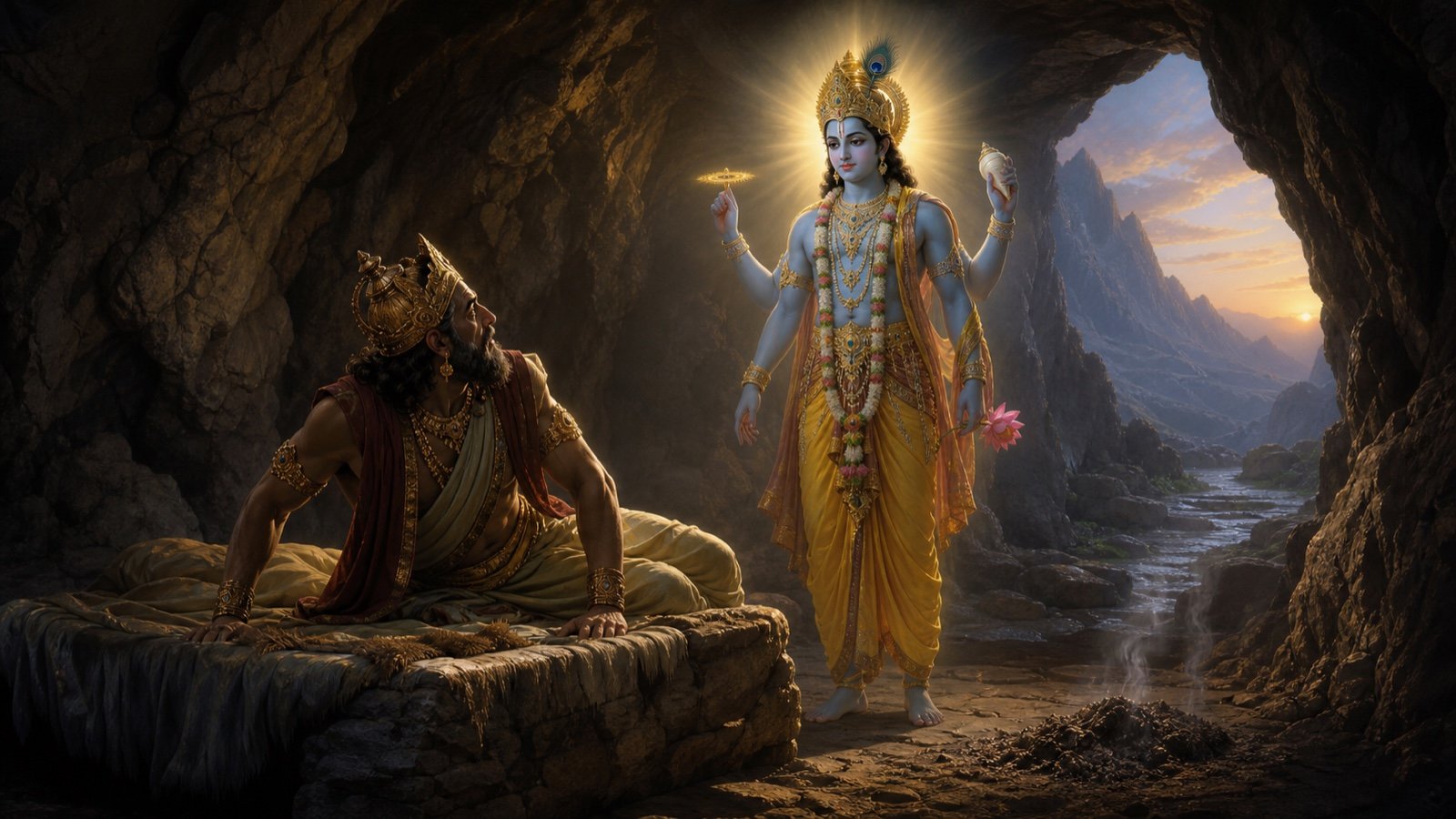
Much later, Krishna was pursued by the fierce Kalayavana. The Lord entered Muchukunda’s dark cave and placed His yellow garment over the sleeping king. Kalayavana rushed in, mistook the sleeper for Krishna, and kicked him. Muchukunda opened his eyes. In an instant the attacker became ashes.
Light in the Cave
Then Muchukunda saw Krishna, whose radiance filled the darkness. He asked the beautiful stranger’s identity. The Lord revealed Himself and offered a boon.
Looking back, Muchukunda saw how royal pride had consumed his years. Surrounded by armies, he had imagined himself independent, yet time had removed kingdom, family, and fame without asking permission. He no longer wanted another throne or celestial pleasure. He asked only for devotion and freedom from worldly attachment.
Krishna praised his clear intention and instructed him to purify the remaining effects of violence through remembrance and austerity. Muchukunda left the cave. People and trees now seemed smaller, signs that a new age had begun while he slept. He walked north toward a life of contemplation.
We may wake from sleep and still live inside a dream of status. True awakening begins when time teaches us what cannot be kept.
When Achievement Is Not Arrival
Muchukunda had completed heroic duty, yet achievement did not answer his soul. His meeting with Krishna transformed exhaustion into renunciation. The story invites us to ask: after the applause, what remains? Service becomes freeing when it is offered to God rather than used to build an identity time must eventually dismantle.
Scriptural basis: Śrīmad Bhāgavatam, Canto 10, Chapter 51. This is an original literary retelling.