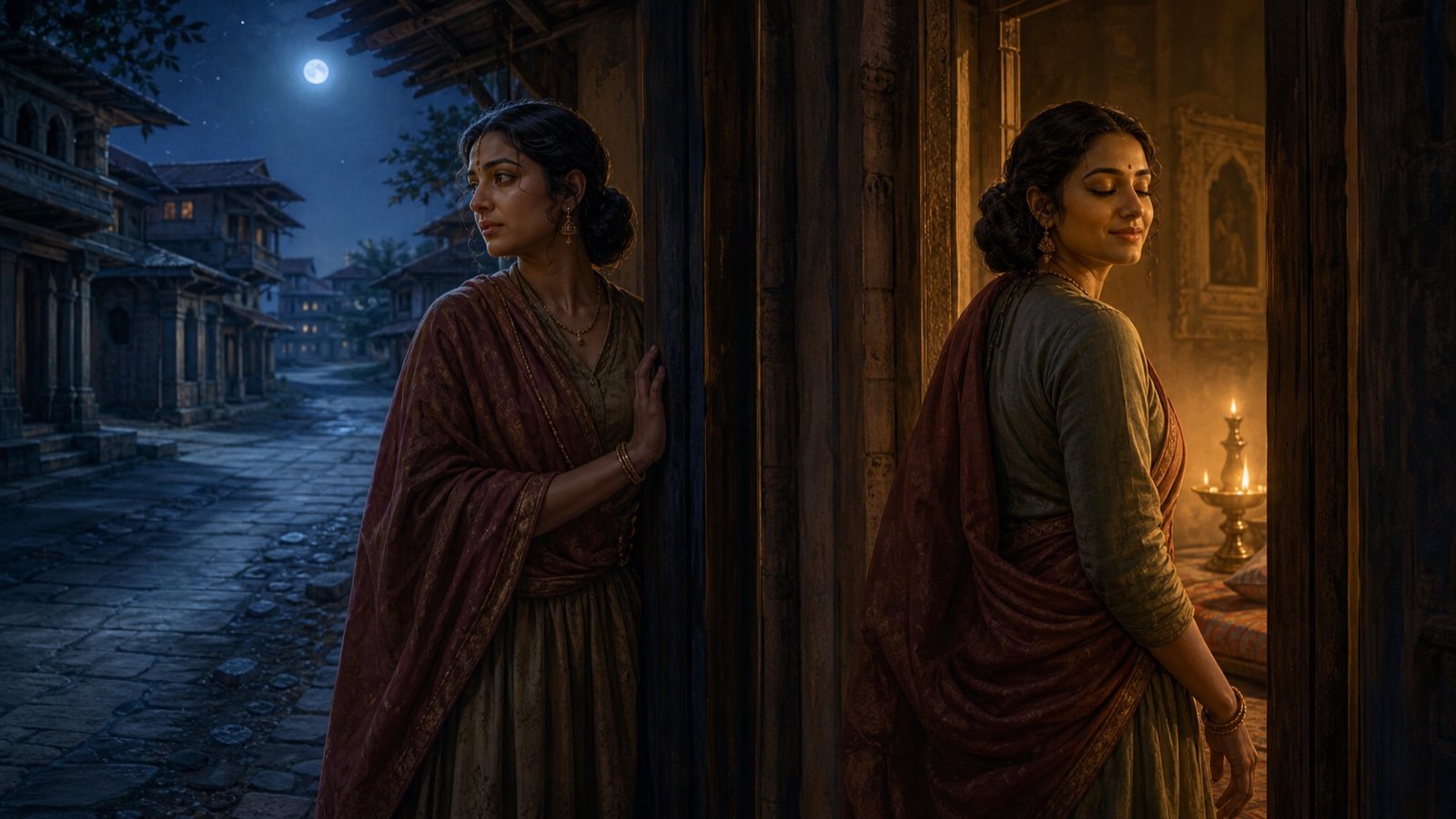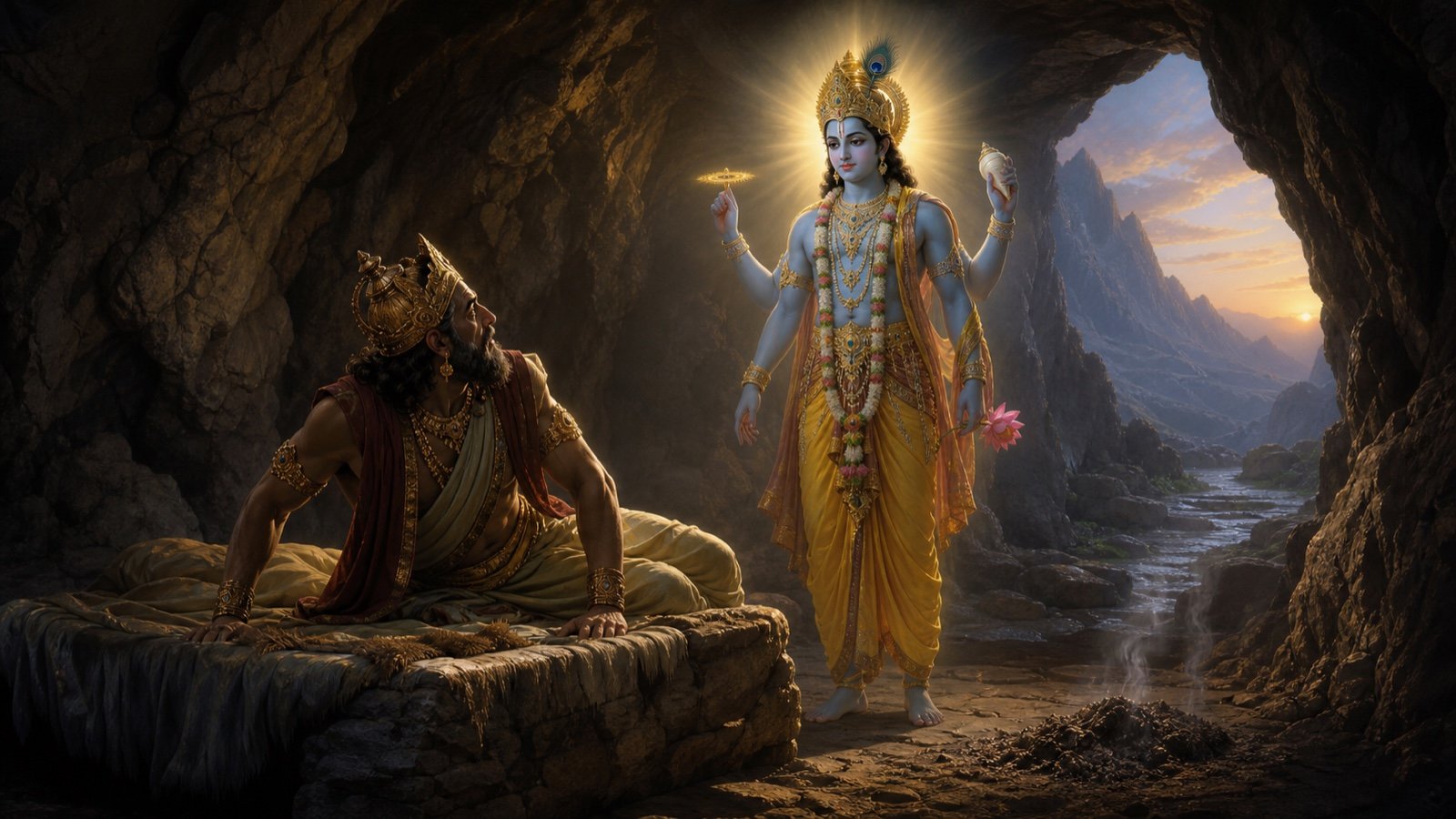
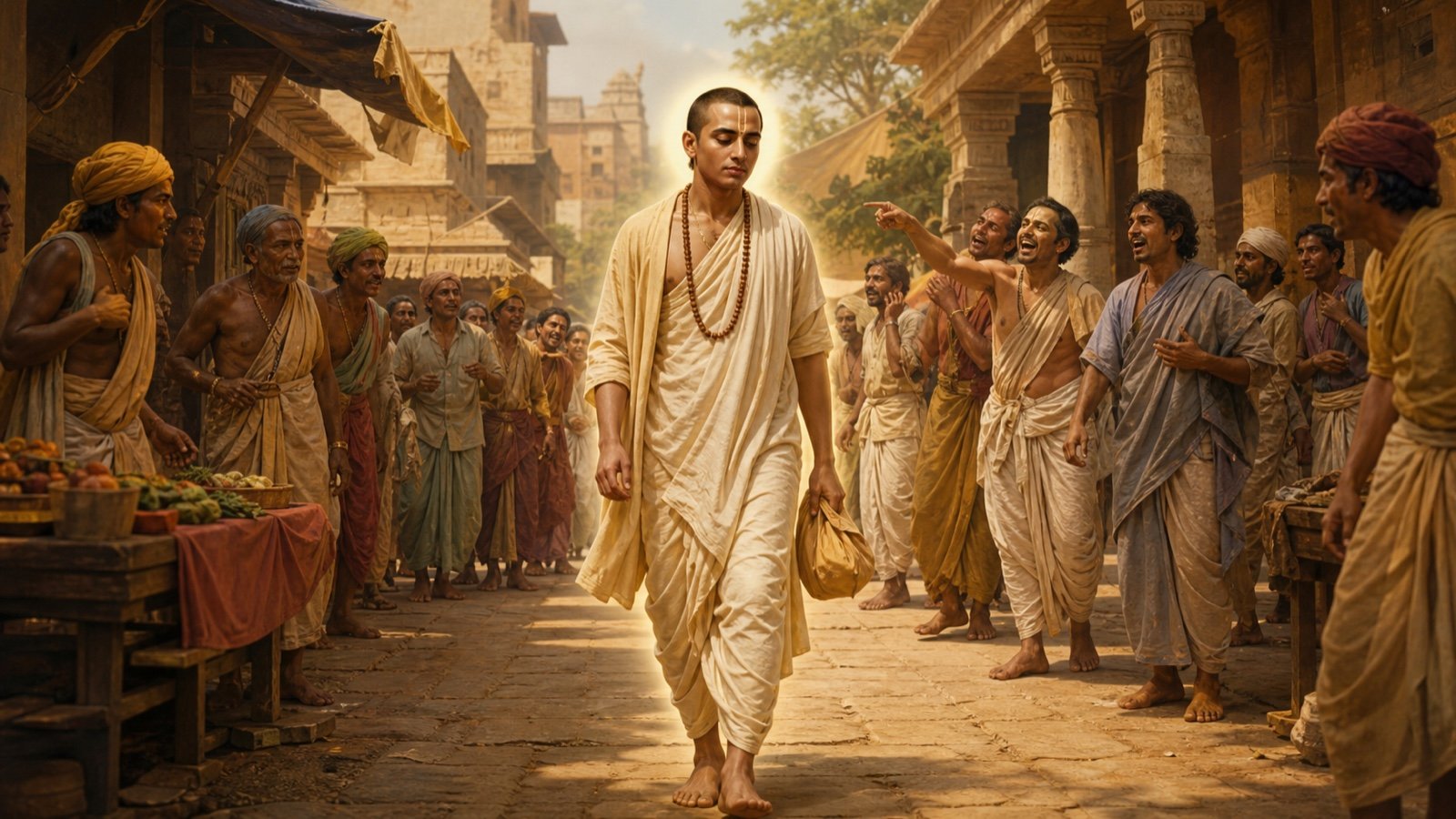
A wealthy brahmana lost everything and became the target of public ridicule. Instead of making the world his permanent enemy, he composed a song: neither stranger nor circumstance rules my inner state as completely as my own mind.
In Avanti lived a prosperous but miserly brahmana. He neglected family, guests, ancestors, and sacred duty to guard his wealth. No one enjoyed it—not even him.
Then fortune turned. Relatives took some wealth, thieves stole some, rulers claimed some, and time destroyed the rest. The treasure he had protected at the cost of every relationship vanished.
At first he grieved. Then insight arose: wealth had given him fear while present and pain while departing. He chose a wandering life, carrying only a staff and bowl.
The Song Under Insult
People did not honour his change. Some mocked him, spat on him, stole his staff, and insulted him. The former miser now had a new temptation—the desire to build an identity from injury.
He watched his mind and sang. These people are not the final cause of my happiness or pain, he reflected. The body, planets, karma, and time all have roles, but suffering becomes “mine” through the mind’s attachment and interpretation. Therefore the mind must be trained through devotion to the Supreme.
This was not permission for cruelty or denial of injustice. It was a refusal to give abusers ownership of his inner direction. He could endure without approving, respond without hatred, and continue without carrying every insult as a permanent self.
When we cannot choose what reaches us, we can still practice choosing what receives a throne within us.
Responsibility Without Self-Blame
The Avanti Brahmana’s song is easily misunderstood. It does not say victims cause every event. It says spiritual freedom grows when the mind is no longer allowed to turn every event into an unchangeable identity. He acknowledges his former greed, accepts the present, and directs attention toward God. Forbearance becomes strength guided by wisdom, not silent support for wrongdoing.
Scriptural basis: Śrīmad Bhāgavatam, Canto 11, Chapter 23. This is an original literary retelling.