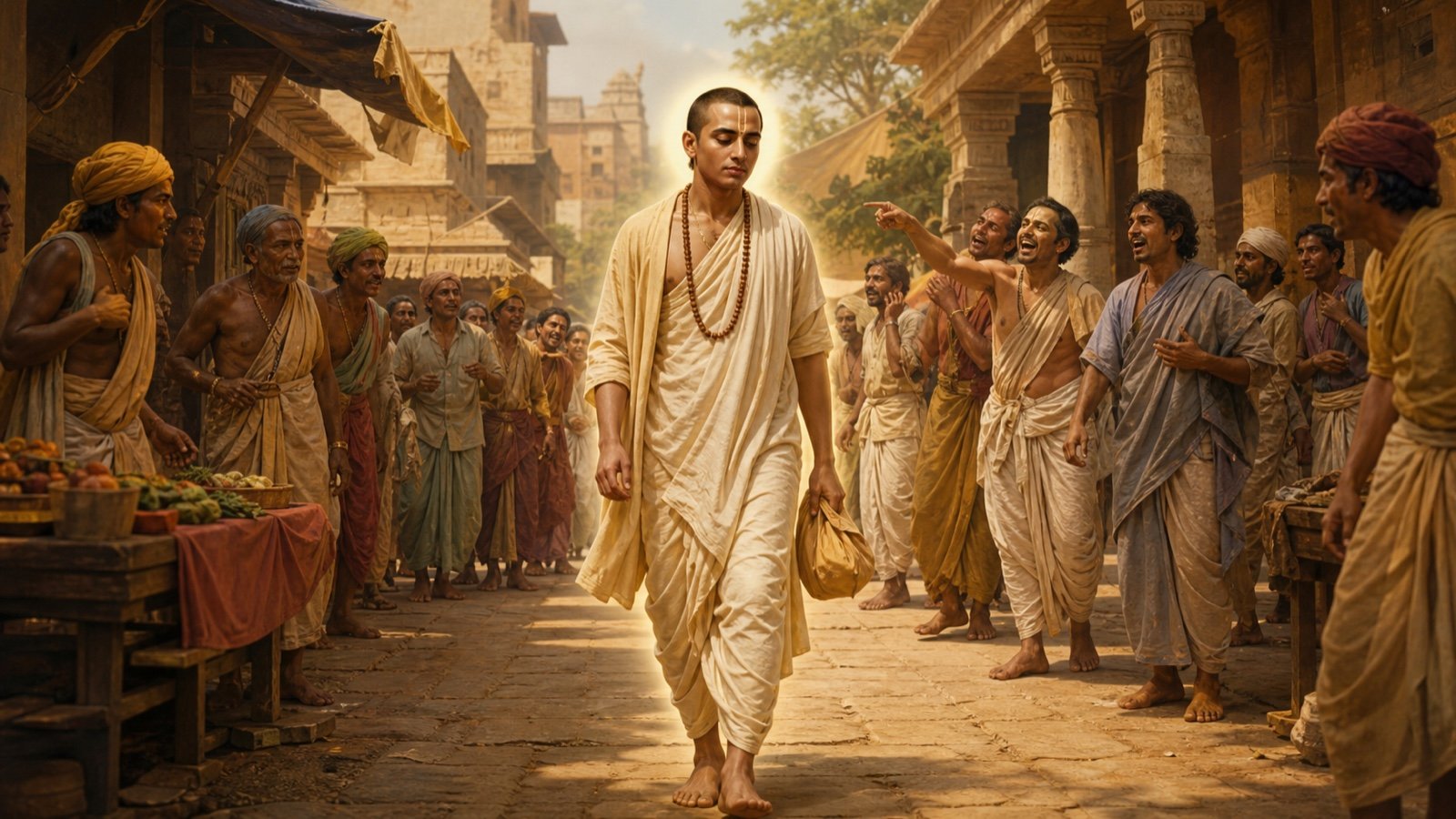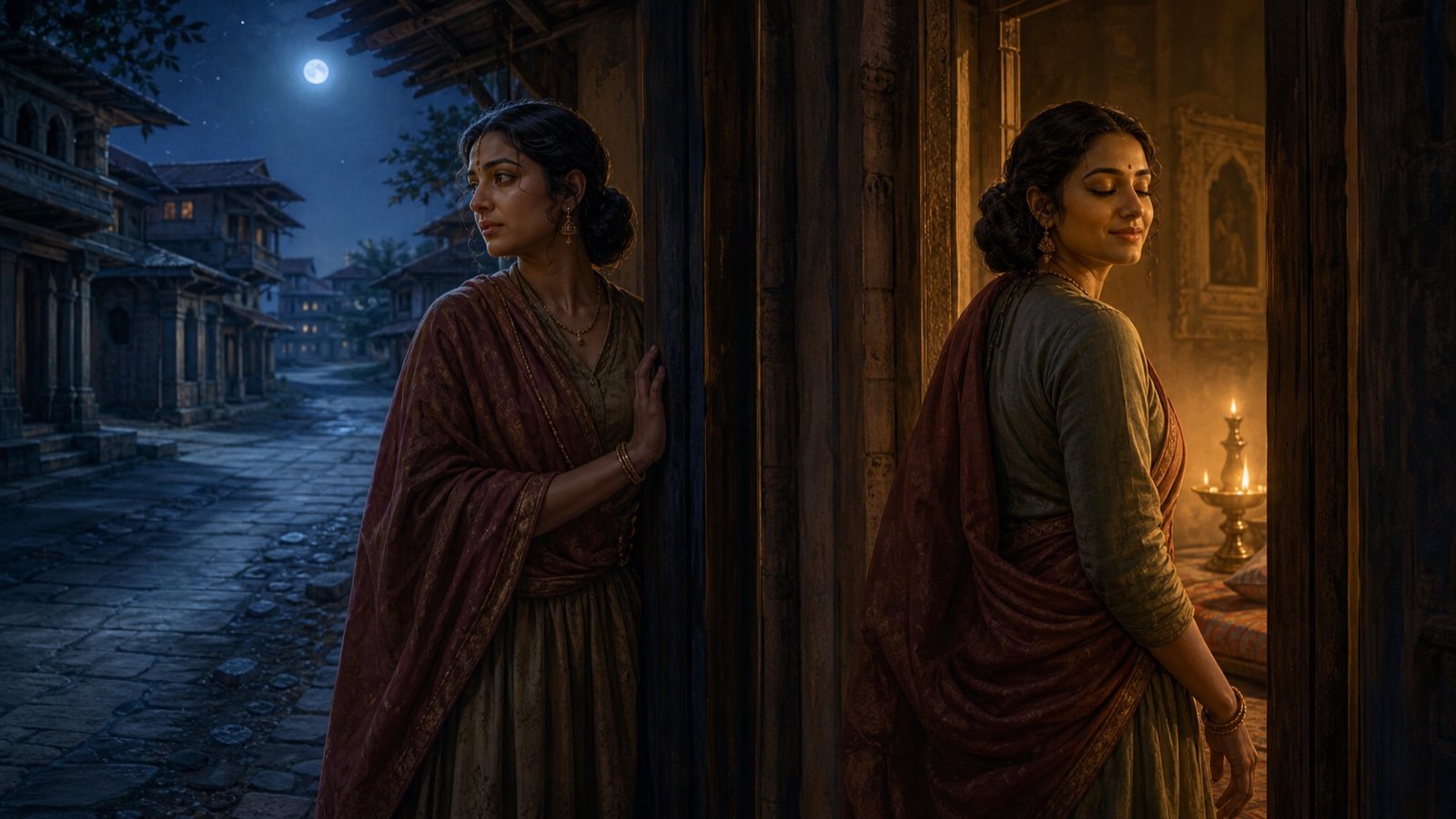

King Puranjana searched the world for the perfect home and found a beautiful city with nine gates. He entered, forgot his oldest friend, and spent a lifetime believing the city was himself.
Narada told this allegory to King Pracinabarhi, who was absorbed in ritual action but had forgotten its spiritual purpose.
Puranjana wandered seeking a place suited to every desire. Near the Himalayas he found a magnificent nine-gated city and a mysterious young queen guarded by a five-hooded serpent. Enchanted, he asked her identity. She did not know her origin, but invited him to enjoy the city with her.
They lived as one. When she was pleased, he felt pleased; when she was angry, he suffered. He hunted, ruled, raised a family, and became so identified with city and queen that he forgot his former companion, Avijnata—the “Unknown Friend.”
When Time Attacked
Years and nights, personified as warriors, steadily assaulted the city. Old age entered. The guarding serpent weakened. At death Puranjana’s mind clung to his wife, and that attachment shaped his next birth as a woman.
Only later did the Unknown Friend return and remind the soul: “You and I have always been companions. You are not this city, nor merely its roles. You forgot Me and therefore mistook every change to the city as a change to yourself.”
Narada then revealed the symbols. The city is the human body; nine gates are its openings; the queen is material intelligence; the serpent is vital energy; the attackers are days and nights; the unknown friend is the Supreme Lord dwelling beside the individual soul.
We care for the city, but we are not the city. We play the role, but we are not exhausted by its ending.
Remembering the Resident
The allegory does not teach contempt for the body. A city should be cared for. Trouble begins when maintenance becomes identity and sensory experience becomes the only horizon. The Lord never abandons Puranjana; He waits as the forgotten friend. Spiritual life is the return of relationship, the moment the resident remembers who has quietly walked beside him all along.
Scriptural basis: Śrīmad Bhāgavatam, Canto 4, Chapters 25–29. This is an original literary retelling.