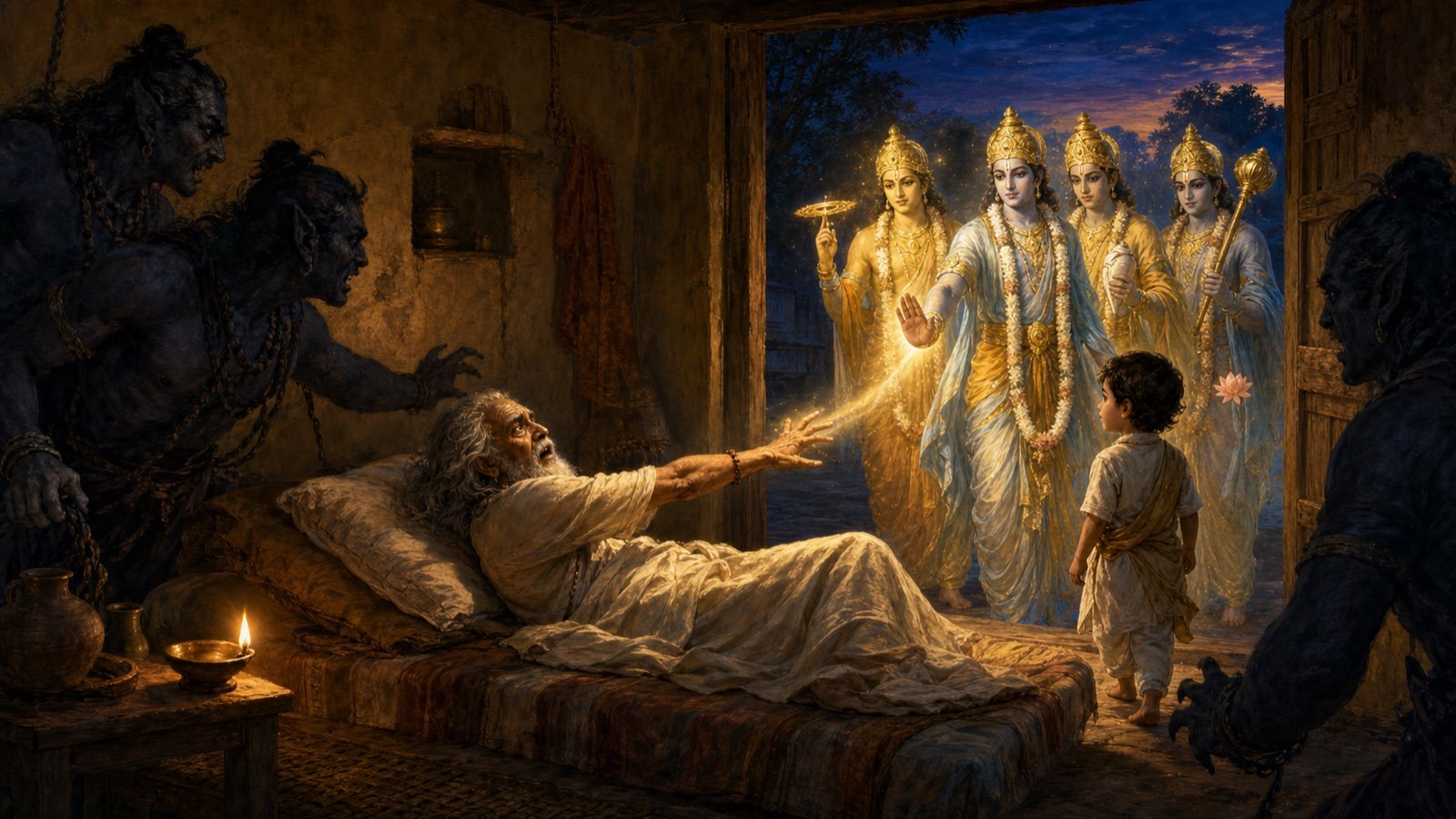
A Sage Like No Other
In the vast pantheon of Hindu sages, few command the same mixture of reverence and fear as Rishi Durvasa. Known for his unpredictable temper, yet also possessing immense spiritual power, Durvasa’s presence in Hindu scriptures often brings dramatic turns in fate—both for gods and mortals alike.
His name itself is symbolic: Durvasa (दुर्वासा) is derived from “Dur” (difficult) and “Vasa” (to dwell), meaning “one who is difficult to live with.” But his fury was not without reason—it often served as a catalyst for divine intervention, spiritual enlightenment, and great boons.
Let’s embark on the journey of Rishi Durvasa through stories directly from the Hindu scriptures, unveiling his divine rage, his crucial role in shaping destinies, and his place in the cosmic order.
⸻
Birth of Rishi Durvasa: The Son of Shiva?
According to the Shiva Purana and Vayu Purana, Rishi Durvasa was not an ordinary sage. He was born from Lord Shiva’s anger, which explains his volatile temperament.
The legend states that once, Lord Shiva’s fury took a tangible form, and from it emerged a sage—Durvasa. As the embodiment of Shiva’s intense energy, he was given the task of roaming the world, testing people’s patience and devotion. Some texts also mention that he was the son of Atri Rishi and Anasuya, making him a brother to Dattatreya and Chandra (Moon God).
⸻
The Curse That Shook the Gods: Durvasa and Indra
One of the most famous tales of Rishi Durvasa comes from the Srimad Bhagavatam (Canto 8, Chapter 6-7), where he indirectly causes the churning of the ocean (Samudra Manthan)—a pivotal event in Hindu mythology.
The Story
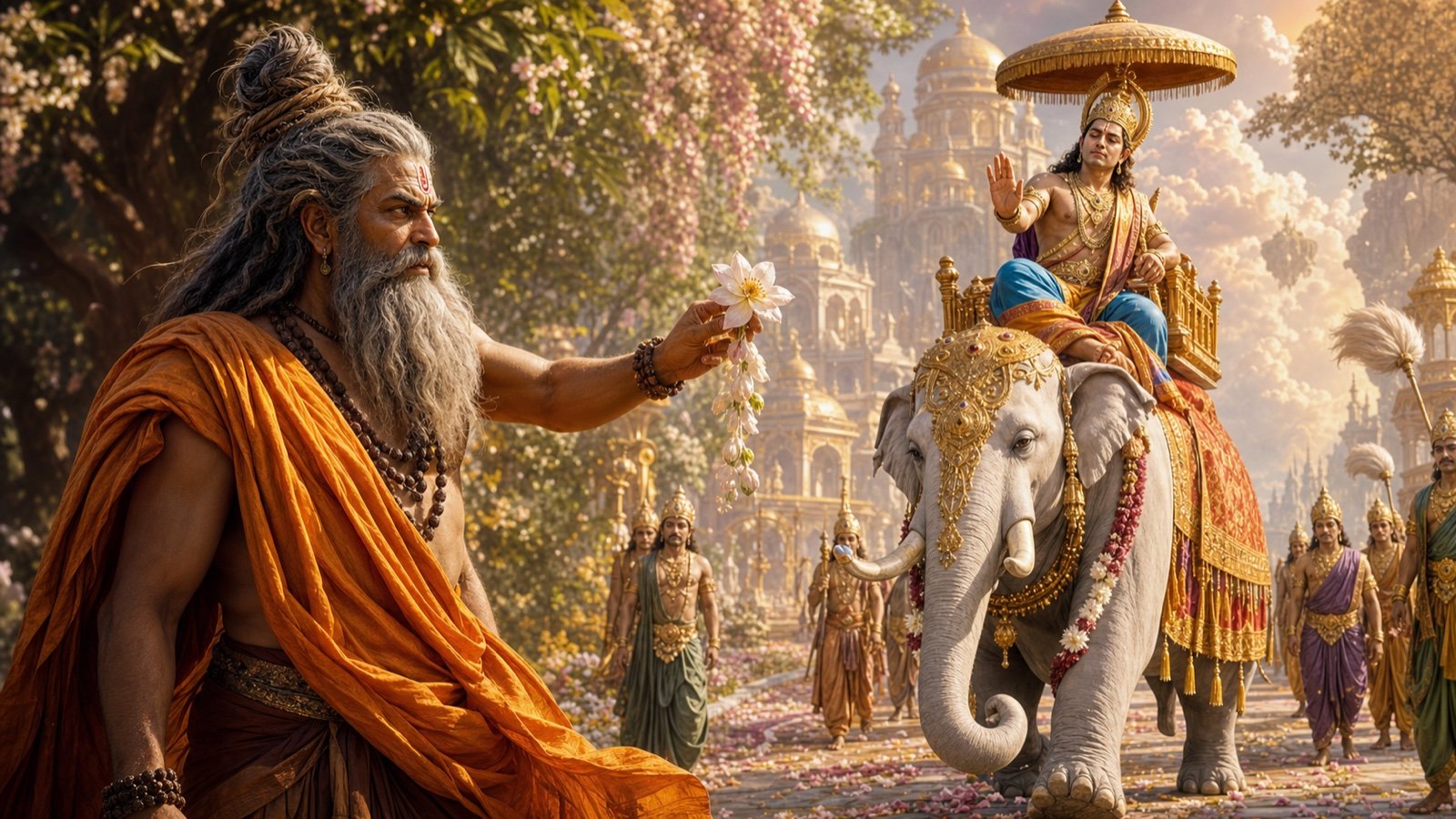
Durvasa, while wandering the heavens, came across a celestial nymph holding a divine Parijata flower. Enchanted by its fragrance, he took it and decided to gift it to Indra, the king of gods.
Indra, seated on his majestic Airavata (divine elephant), took the flower casually, placing it on his elephant’s head. However, Airavata, irritated by the scent, tossed the flower onto the ground.
This disrespect enraged Durvasa, who saw it as Indra’s arrogance and lack of gratitude. In his wrath, he cursed Indra:
“O foolish king of the Devas! Because you have shown no respect for divine blessings, you shall lose all your power and prosperity!”
True to the curse, Indra soon found his kingdom crumbling. The Asuras (demons) overpowered the Devas, and the gods lost their divine abilities.
To restore balance, the Devas had to churn the Ocean of Milk (Kshirsagar), a process that eventually led to the emergence of Amrit (nectar of immortality) and many other celestial treasures. Thus, Durvasa’s curse, though harsh, led to an event of immense significance.
⸻
Durvasa and Lord Krishna: A Test of Patience
In the Mahabharata (Vana Parva, Chapter 258), Rishi Durvasa makes another memorable appearance, this time testing the unwavering devotion of Draupadi and Lord Krishna.
The Story
During the Pandavas’ exile, Duryodhana, seeking to humiliate them, cunningly invited Durvasa and his 10,000 disciples to visit their forest dwelling. Knowing Durvasa’s temper, he hoped the sage would curse the Pandavas if they failed to provide proper hospitality.
However, Draupadi had already fed her family, and their divine vessel (Akshaya Patra) would only produce food once a day. With no food left, she turned to Lord Krishna for help.
Krishna, ever the divine trickster, asked Draupadi if there was any food left. She found a single grain of rice stuck to the pot, which Krishna ate with complete satisfaction.
Miraculously, this act satiated Durvasa and all his disciples spiritually, preventing them from demanding food. This story highlights not only Durvasa’s fearsome presence but also Krishna’s divine intervention in protecting his devotees.
⸻
The Curse of Ambarisha: Power of Devotion Over Wrath
The Bhagavata Purana (Canto 9, Chapter 4) narrates another significant encounter between Durvasa and King Ambarisha, a devout Vishnu devotee.
The Story
King Ambarisha observed the Ekadashi fast and was about to break it when Durvasa arrived at his court. The king, knowing it was impolite to eat before his guest, waited for Durvasa to complete his bath and return. However, since breaking the fast at the right time was crucial, he drank a small amount of water, just enough to conclude the fast without consuming food.
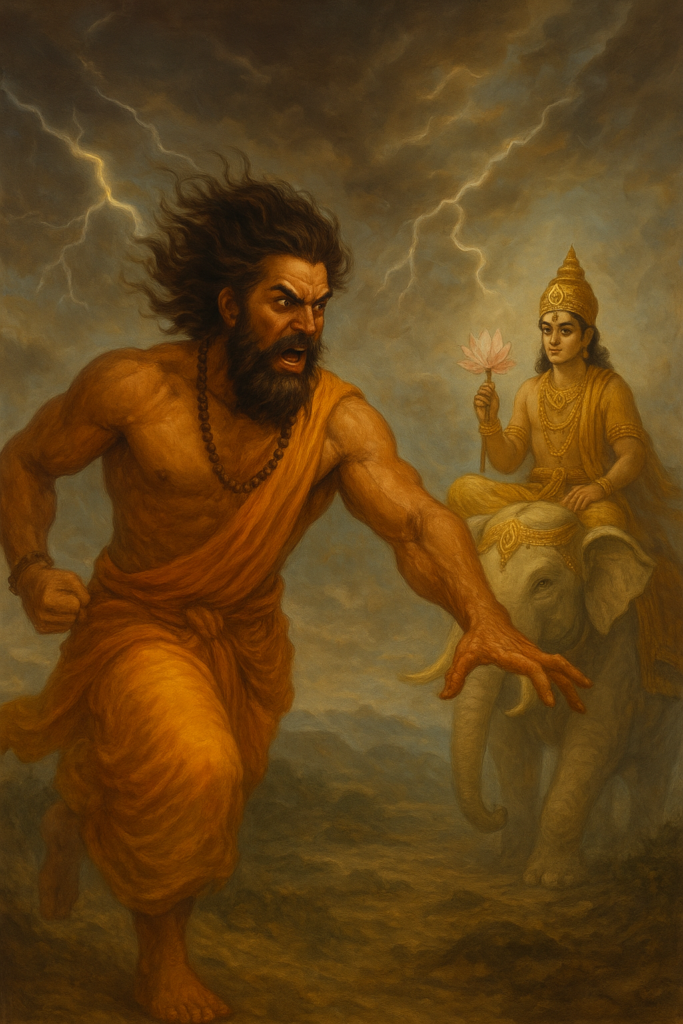
Durvasa, upon returning, misinterpreted this act as disrespect, believing Ambarisha had insulted him. Enraged, he summoned a fierce fiery demon to attack the king.
But before the demon could strike, Lord Vishnu’s Sudarshana Chakra appeared, chasing Durvasa. The sage ran across heavens, earth, and the underworld, seeking protection from Brahma and Shiva, but no one could help him.
Finally, he reached Lord Vishnu, who simply replied:
“I am bound by the devotion of my bhakta (devotee). Only Ambarisha can forgive you.”
Humbled, Durvasa returned to the king and begged for forgiveness. Ambarisha, with his pure heart, prayed for Durvasa’s well-being, and only then did the Sudarshana Chakra spare him.
This story illustrates that even the most powerful sages are powerless against true devotion and that divine grace always protects the righteous.
⸻
Conclusion: Durvasa’s Role in Hindu Dharma
Durvasa’s stories are not just tales of anger—they are lessons in patience, devotion, and cosmic justice. His presence in the scriptures serves multiple purposes:
• Testing humility and devotion (Indra, Draupadi, Ambarisha).
• Being a divine instrument of fate (Samudra Manthan).
• Reinforcing the power of Dharma over ego and arrogance.
Despite his fearsome nature, Rishi Durvasa is also a great yogi whose blessings could change destinies. His interactions with gods, kings, and common people make him one of the most fascinating and complex figures in Hindu mythology.
Would you dare to cross paths with the sage of wrath? Or would you greet him with reverence and patience? Either way, his presence would surely be a test of your character!