King Chitraketu had everything except the one thing he wanted: a child. When the long-awaited prince died, two sages asked a question that changed grief into awakening—who, across countless lives, truly belongs to whom?
Chitraketu ruled a vast kingdom and had many queens, yet his palace felt empty. The sage Angira saw the sorrow hidden beneath royal splendour and blessed the king with a son. He also warned that the child would bring both joy and grief.
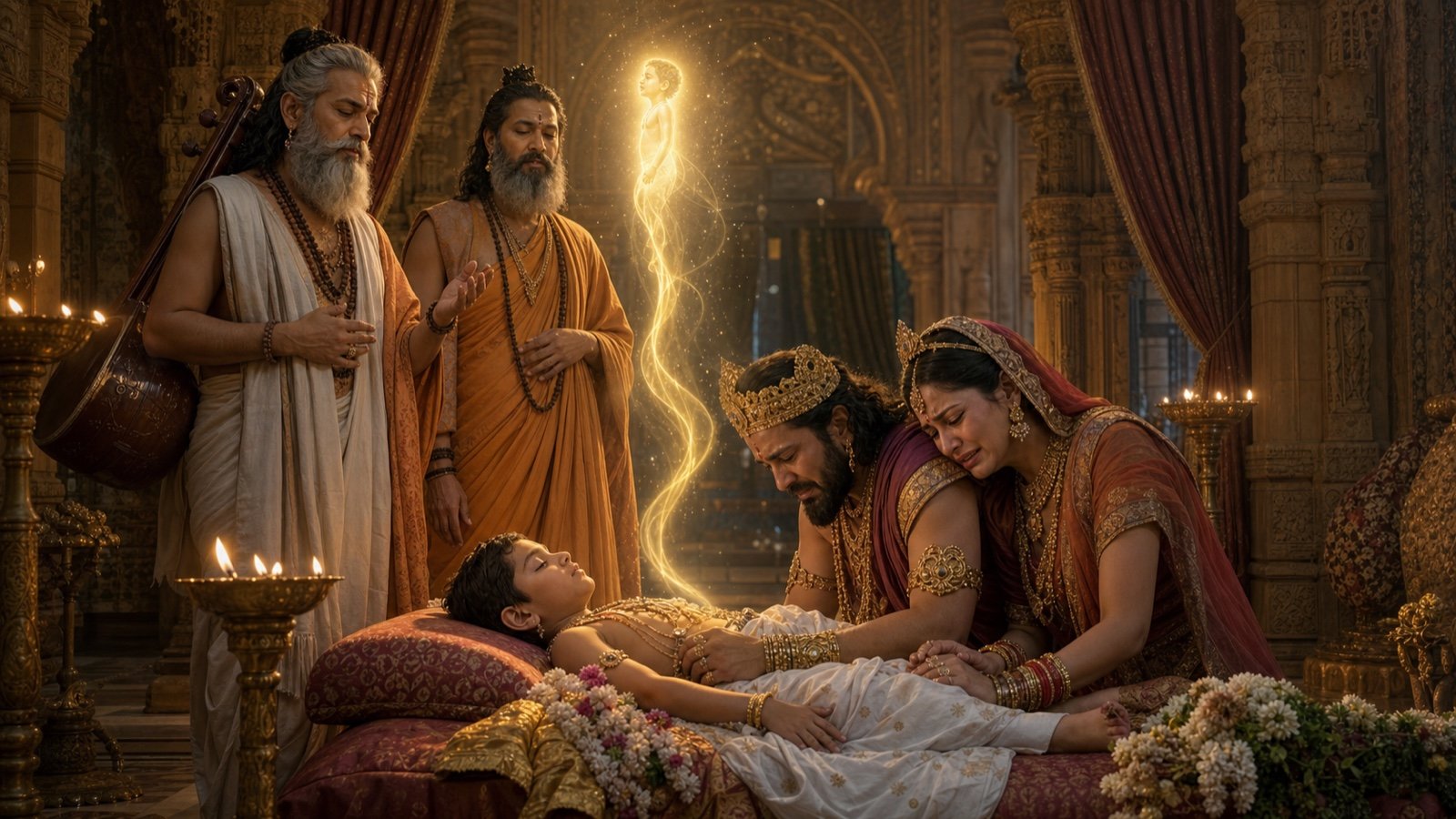
The boy’s birth filled the palace with celebration. But the chief queen’s happiness awakened jealousy in the others. In bitterness, they poisoned the child. His mother found him still and cold; the king fell beside the body, unable to imagine a world that continued without his son.
The Question at the Funeral
Angira returned with Narada. They did not dismiss the parents’ pain. Instead, they asked them to look beneath it. People meet like travellers sharing an inn, they explained. By karma, souls become parents and children, friends and strangers, then part again when time changes the road.
Narada called the departed soul back to speak. Before the silent court, the child’s voice asked, “In which birth were these people my parents?” He had passed through innumerable forms and relationships. Which brief meeting should he call permanent?
The answer was not coldness. It was a wider love: the soul is eternal, while every earthly role is precious precisely because it cannot be possessed forever.
The child departed again. Chitraketu performed the final rites, but his grief no longer had the same chains. Guided by the sages, he turned inward, received sacred instruction, and eventually beheld the Lord.
Love becomes wiser when it stops saying “You are mine forever” and begins saying “For the time given to us, let me serve you well.”
Why This Story Matters
The Bhāgavatam does not ask grieving people to feel nothing. Chitraketu weeps. The teaching arrives inside that grief: death ends a role, not the soul. Spiritual wisdom does not erase affection; it frees affection from the impossible demand that change must never come.
Scriptural basis: Śrīmad Bhāgavatam, Canto 6, Chapters 14–16. This is an original literary retelling.