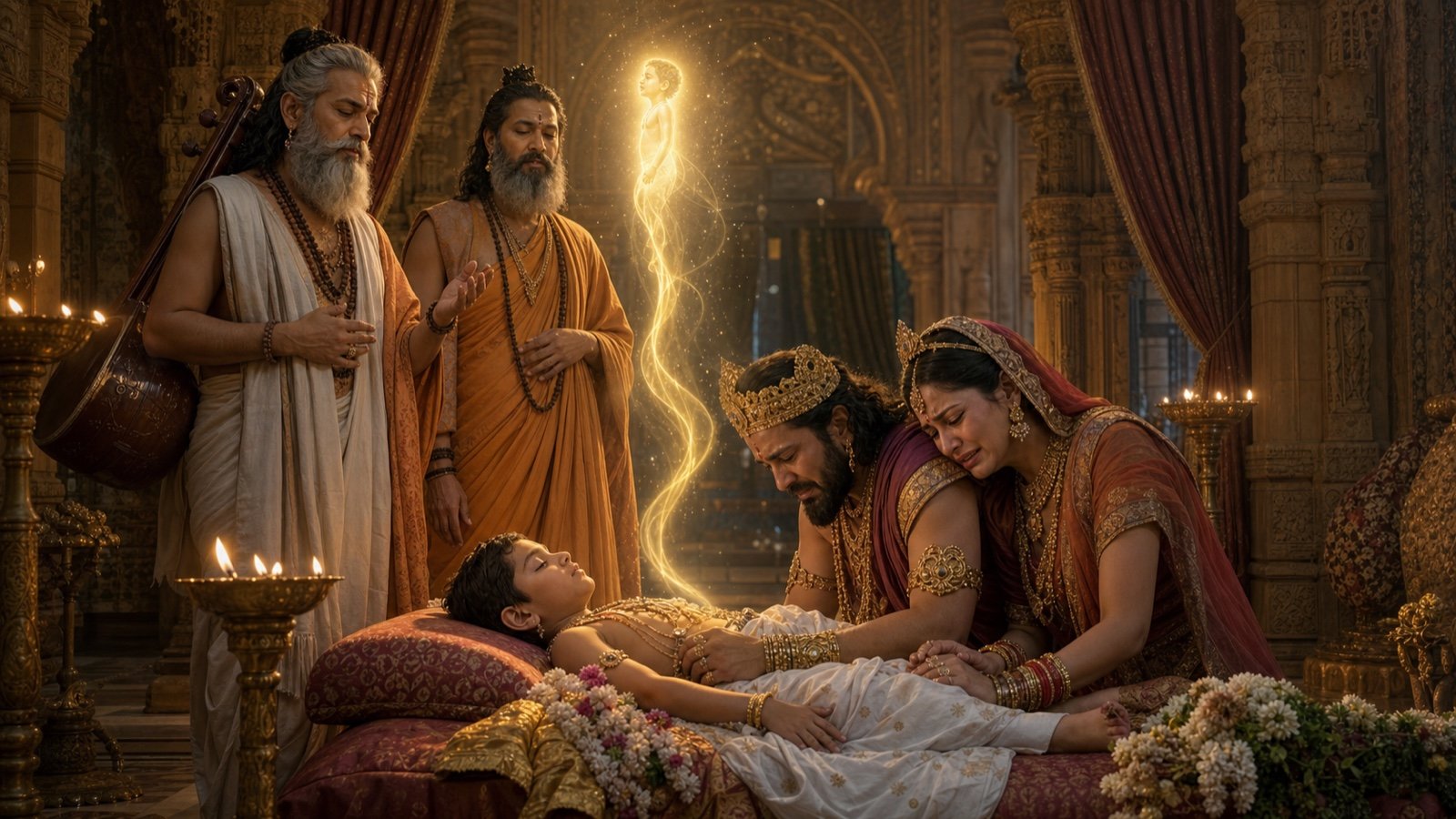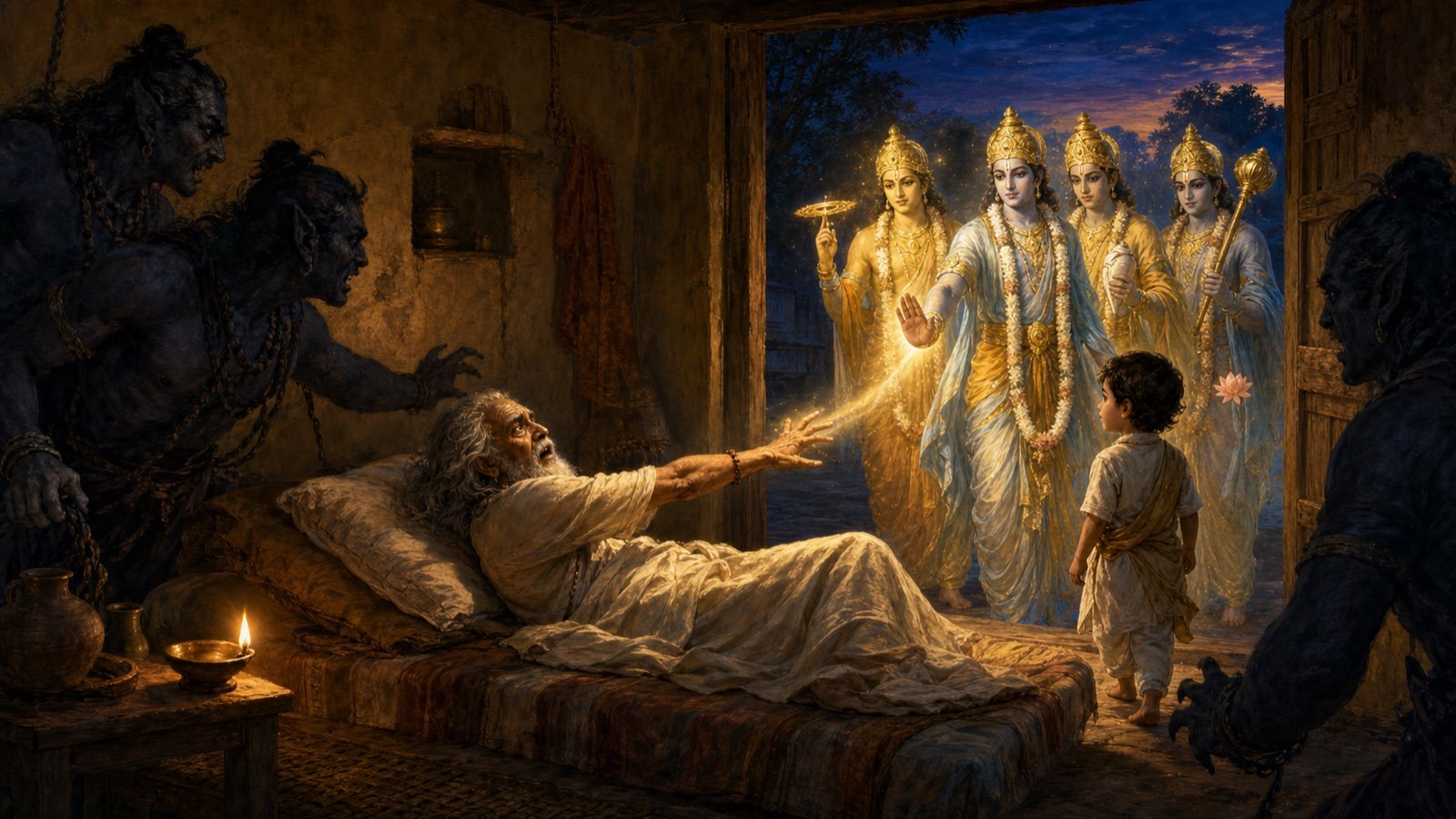
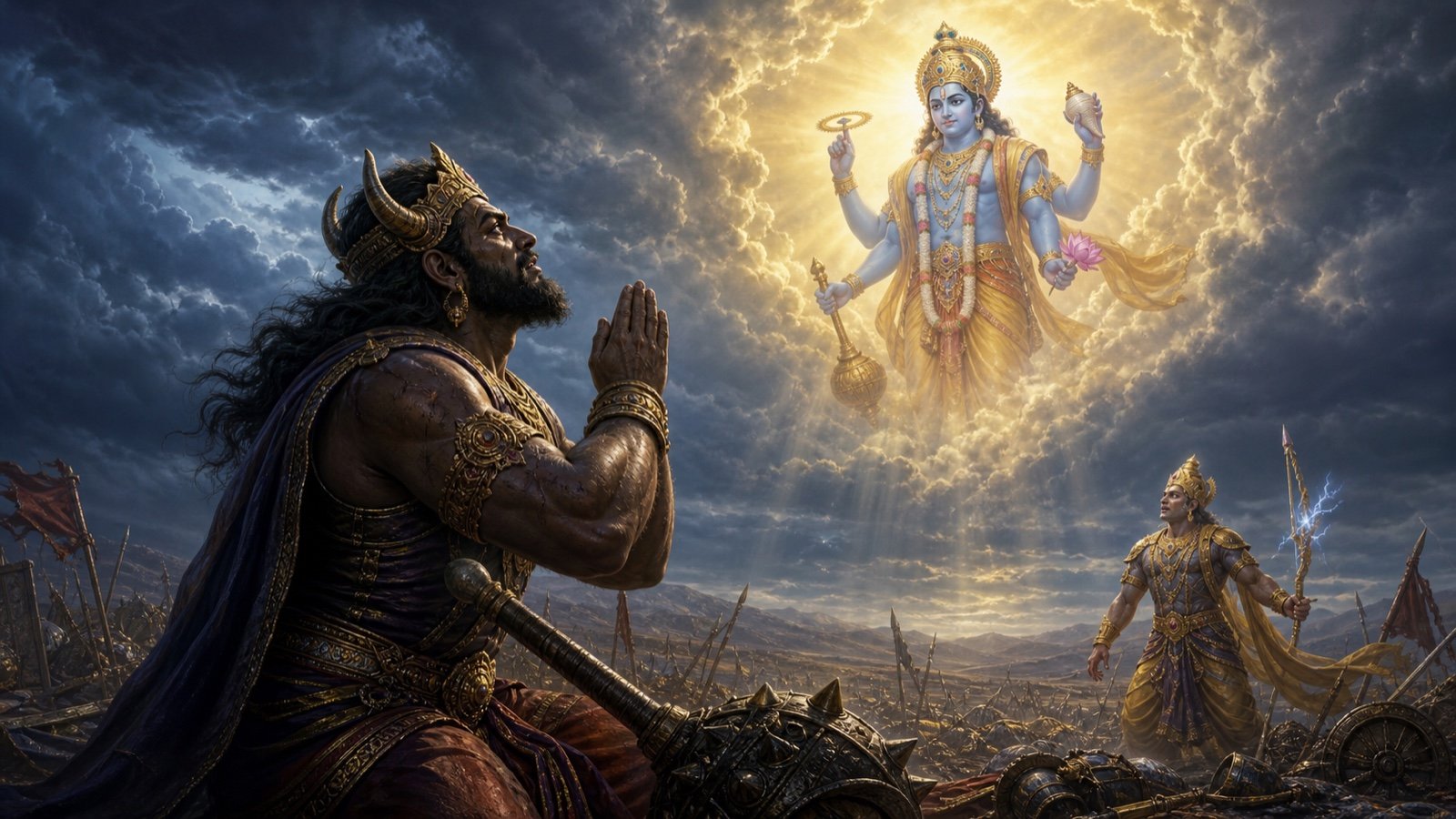
Everyone saw Vritrasura as a demon. On the battlefield, however, the words from inside his fearsome form revealed a devotee who wanted neither victory nor heaven—only remembrance of the Lord.
The armies of the gods and asuras faced one another beneath a sky darkened by weapons. At the centre stood Vritrasura, enormous and terrifying. Opposite him was Indra, carrying the thunderbolt fashioned for one purpose: to kill him.
When the asura soldiers fled, Vritrasura called them back. Death comes to everyone, he said; better to meet duty with courage than abandon companions in fear. Then he turned to Indra and urged him to raise the thunderbolt.
Indra hesitated. His enemy spoke not like one desperate to survive, but like someone already free.
The Prayer No One Expected
Vritrasura prayed that he might serve the Lord’s servants. He did not ask for dominion, yogic powers, or even liberation. Like a young bird waiting for its mother, a calf longing for the cow, and a separated wife awaiting her beloved, his mind yearned for the Lord.
He knew the weapon would destroy his body. Yet beneath armour, anger, and an asura birth lived the devotion of his former life. The battlefield exposed what appearances had concealed.
The duel resumed. Vritrasura fought with full strength, even swallowing Indra for a moment, but the protected king escaped. At last the thunderbolt severed Vritrasura’s head. As the huge body fell, a radiant spiritual spark rose from it and returned to the Supreme.
A body may frighten the world while a heart, unseen by the world, rests at the feet of God.
Beyond Labels
The story overturns the easy division between “godly appearance” and “ungodly appearance.” Indra possessed heaven but carried fear and guilt. Vritrasura wore an enemy’s form but possessed surrender. The Bhāgavatam asks us to judge spiritual life by remembrance, humility, and courage—not costume, status, or tribe.
Scriptural basis: Śrīmad Bhāgavatam, Canto 6, Chapters 9–12. This is an original literary retelling.